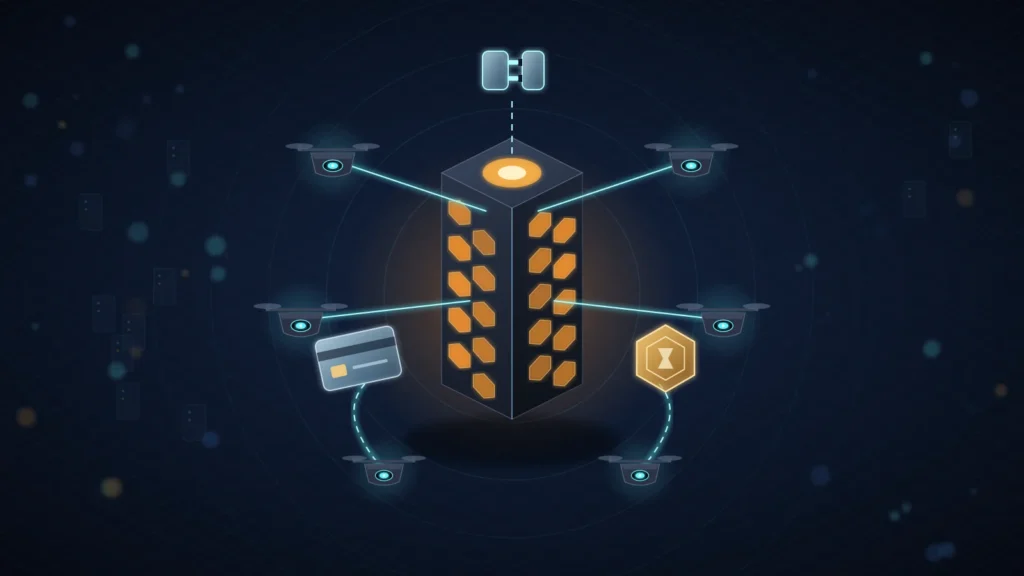
ARTEX Gateway ran behind nearly nine in ten of the AI attack framework IPs that hit Shadowserver honeypots between November 9 and 23, 2026. The Shadowserver Foundation report shows these agents trying to relay traffic to payment and crypto services and probing AI, LLM and MCP endpoints. Its daily scans also found around 4,200 exposed AI attack framework instances on November 23. Defenders should check whether any of these consoles run on their networks, lock down AI services and rotate exposed secrets.
| Actor or malware family | ARTEX Gateway (open-source agentic attack framework) and forks such as AntiFox; also CyberStrikeAI, Cairn, PentAGI and RedAmon |
|---|---|
| Activity | Automated scanning, relay attempts, credential hunting, exploit attempts for old CVEs |
| Targets or victims | VPN and remote-access gateways, VMware vSphere, Jenkins, Metabase, GeoServer, AI/LLM services and MCP endpoints |
| Delivery vector | LLM agents sending HTTP requests from cloud-hosted IPs, mostly with browser-like user agents |
| Scale | 80+ attacking IPs, 10,000+ honeypot events (Nov 9-23, 2026); about 4,200 exposed framework instances (Nov 23, 2026) |
| Source | Shadowserver Foundation scans and honeypots |
What Shadowserver found about ARTEX and other AI attack frameworks
Shadowserver now scans daily for exposed instances of 15 autonomous AI attack frameworks. The list includes ARTEX Gateway, AntiFox, CyberStrikeAI, PentAGI, PentestCode, Strix and others. Some are built for authorized penetration testing and red-teaming, so not every instance is malicious.
On November 23, 2026, the scans counted around 4,200 exposed instances. The day before, the count was just under 3,700. Nearly half of the instances sat in Asia, over a third in North America, and most of the rest in Europe.
Exposed instances per framework
ARTEX made up around 70% of exposed instances on most days. PentestCode reached over 600 after tripling on November 23. CyberStrikeAI held at around 500.
PentAGI fell from over 400 on November 17 to below 200. AntiFox, an ARTEX fork, grew fastest, from a handful to around 200. By November 22, ARTEX and AntiFox together made up about three-quarters of all instances. The other seven frameworks totaled fewer than 100.
Context: FBI and AWS reports
The FBI FLASH-20261113-001 advisory says threat actors have used ARTEX since at least August 2026, and it reports over 1,600 exposed ARTEX consoles in early November. The original repository was removed on October 8, 2026, but forks, mirrors and a commercial ARTEX PRO edition remain. On the same day, Amazon Threat Intelligence described two ARTEX-driven campaigns caught by its MadPot sensors: AI credential theft and deepfake attempts against crypto exchange identity checks.
How the attack works
Operators give the framework a goal in plain language. LLM agents then plan and run reconnaissance and exploitation with little human input. The FBI notes that ARTEX has no model of its own and connects to external LLM providers.
Honeypot traffic, November 9 to 23
More than 80 IPs fingerprinted as running AI attack frameworks generated over 10,000 events across Shadowserver’s Global Honeypot Sensor Network. A handful of IPs produced most of the events. Nearly nine in ten attacking IPs ran ARTEX Gateway. CyberStrikeAI, Cairn, PentAGI and RedAmon accounted for the rest, with five or fewer IPs each. Only two IPs ran PentAGI, yet one of them was the busiest IP observed.
The IPs geolocated to more than 20 countries, with most activity from the United States and Hong Kong. Nearly all sat on cloud networks. Shadowserver says this likely shows where servers are hosted, not where operators are based.
Relay attempts to payment and crypto services
About six in ten IPs tried to tunnel traffic through the sensors to other destinations. Payment, banking and crypto services drew over 40% of relay requests. Most of those came from just two IPs. Other relay targets included online shops and SSH, MySQL and CouchDB servers.
Probes of AI, LLM and MCP endpoints
A smaller group of IPs probed AI and automation services such as n8n, Dify, Flowise and MLflow. They also hit LLM model-listing endpoints, agent and LLM-provider APIs, and Model Context Protocol (MCP) endpoints.
Credential hunting and scanning
Roughly one in ten IPs looked for credentials. They requested .env files, sometimes through path traversal, and Git metadata. Some tried default logins such as admin/admin on Jenkins, and two guessed Telnet passwords. Shadowserver notes that .env files often hold database passwords, cloud and payment API keys, and LLM API keys.
About a third of direct requests were general discovery, such as homepage requests. The busiest IPs looked for VPN and remote-access gateways, VMware vSphere, Jenkins, Metabase and GeoServer. A small share went after IoT devices like digital signage and routers.
The traffic was largely automated, with dozens of requests per minute at peak. Most IPs worked in short bursts, and nearly half spent under an hour in total on the sensors. A few stayed active every hour of the day for several days.
Vulnerabilities used in this campaign
About one in ten IPs sent exploit or injection payloads. The most common targeted four old, already patched flaws. Shadowserver reports the attempts against its sensors, not successful compromises.
| CVE | Product | CVSS | CISA KEV | Fixed version |
|---|---|---|---|---|
| CVE-2023-38646 | Metabase (pre-auth command execution) | Not disclosed in CVE record | Not confirmed | 0.46.6.1 / Enterprise 1.46.6.1 (also 0.45.4.1, 0.44.7.1, 0.43.7.2) |
| CVE-2017-9841 | PHPUnit eval-stdin.php (code injection, CWE-94) | 9.8 (CVSS v3.1, CVE record) | Added Feb 15, 2022 | 4.8.28 / 5.6.3 |
| CVE-2023-20198 | Cisco IOS XE web UI (CWE-420) | 10.0 (CVSS v3.1, Cisco) | Added Oct 16, 2023 | See Cisco advisory |
| CVE-2024-36401 | GeoServer (eval injection, CWE-95) | 9.8 (CVSS v3.1, CVE record) | Added Jul 15, 2024 | 2.22.6, 2.23.6, 2.24.4, 2.25.2 |
Fix details are in the Metabase security advisory, the Cisco IOS XE web UI advisory and the GeoServer advisory GHSA-6jj6-gm7p-fcvv. For PHPUnit, the CVE-2017-9841 record notes attacks against sites with an exposed /vendor folder. GeoServer lists removing the gt-complex jar as a workaround, though this may break some features. The KEV entries for CVE-2023-20198, CVE-2017-9841 and CVE-2024-36401 confirm past exploitation in the wild.
Impact
The honeypot data shows attempts, not confirmed breaches. The targets overlap with ARTEX campaigns described by other sources. According to the agents’ own records, which Amazon could not verify, they pulled upstream provider keys from exposed AI apps and feeding them back into the ARTEX model gateway to pay for more hunting. The FBI links ARTEX to the exposure of personal data of about 67,000 people at South Korean financial institutions. It also ties the tool to sign-in attempts against more than 2,250 tenants after the ConnectWise Cloud Backup compromise.
How to protect your systems
- Subscribe to Shadowserver’s free daily network reports. The Device Identification report flags exposed frameworks with device_type ai-attack-framework, and the Honeypot HTTP scanner events report lists attacking IPs with the same label.
- If a framework on your network is authorized, restrict it to trusted addresses or a VPN, enforce strong authentication and keep it updated. If not, isolate it and investigate it as compromised or misused.
- Hosting providers should review labeled IPs under their abuse policies.
- Consider blocking known framework IPs, but review blocklists often, since hosting IPs change hands. Avoid blocking authorized testers.
- Rate-limit and alert on rapid, repeated probing of one target, and make sure someone acts on alerts outside business hours.
- Keep .env files and Git metadata off web roots, remove default logins such as admin/admin on Jenkins, and patch the four CVEs above.
- Put AI apps, model gateways and inference endpoints behind authentication, as Amazon advises, and watch for unexpected AI spend.
For national CSIRTs, Shadowserver advises notifying network owners, putting government and critical infrastructure first. Responders should not attribute activity on source IP or country alone, and they should keep proxy and gateway logs. The FBI asks victims to report ARTEX-related activity to a local field office or to IC3.
Why it matters
The CVEs in this traffic are years old and listed in KEV. The agents did not need new bugs. They swept for default logins, leaked secrets and unpatched servers at machine speed, which matches Amazon’s finding that ARTEX succeeds where basic hygiene fails.
The MCP and LLM probes show AI services joining the standard target list. Teams that deployed n8n, Dify, Flowise or MLflow outside normal change control should treat them as production systems. Count growth also matters. Exposure rose from just under 3,700 to around 4,200 in one day, and ARTEX forks like AntiFox are growing fastest. Shadowserver plans to add more frameworks to its scans.