CVE-2026-134624 is a server-side request forgery (SSRF) flaw in N-able Mail Assure, also sold as SpamExperts, that N-able rates 9.3 (Critical) under CVSS 4.0. CISA added it to the Known Exploited Vulnerabilities (KEV) catalog on November 23, 2026, based on evidence of active exploitation. Builds before 20261121.1943 are affected: N-able has fixed its Hosted Cloud, and SpamExperts Local Cloud operators should confirm they run build 20261121.1943 or later.
Is CVE-2026-134624 being exploited?
Yes. CISA listed the flaw in the KEV catalog entry for CVE-2026-134624 on November 23, 2026. The entry marks ransomware use as “Unknown” and flags forensic triage as required under BOD 26-04. CISA’s enrichment in the CVE record rates exploitation “active,” automatable “no” and technical impact “total.”
N-able’s own account is narrower. Its Mail Assure incident update of November 22 reports no evidence of exploitation beyond “the single N-able-hosted server identified in our initial investigation.” The company has not said whether this flaw was the attacker’s way in. N-able has published no indicators of compromise, and no public proof-of-concept has been confirmed.
The same CISA alert also added CVE-2026-133968, a path traversal flaw in Project MONAI’s MONAI Label.
What is CVE-2026-134624?
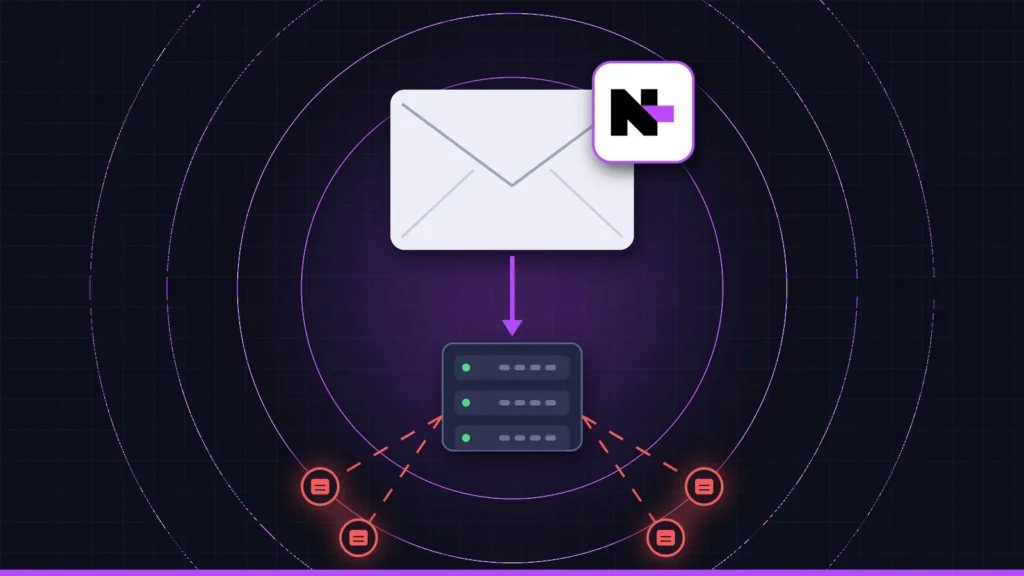
The bug sits in a connection check that Mail Assure runs for LDAP synchronisation when a relay is configured. According to N-able’s security advisory, builds before 20261121.1943 do not restrict where that check connects. An authenticated API user can make the server connect to arbitrary internal hosts and ports. That user can also learn which ones are reachable and send crafted data to internal services.
N-able classes the issue as CWE-918. Its CVSS 4.0 vector is AV:N/AC:L/AT:N/PR:H/UI:N/VC:H/VI:H/VA:N/SC:H/SI:H/SA:N. The attack runs over the network and needs no user interaction. It does need high privileges, so an attacker without API access cannot trigger it. The high SC and SI values rate the impact on other systems behind the vulnerable server.
NVD lists the record as “Received” and has not published its own score. N-able’s 9.3 is therefore the only score so far. The advisory does not claim code execution, and it credits no outside researcher. The Hacker News reported that N-able found the flaw while investigating a breach of its Mail Assure and SpamExperts Hosted Cloud.
Affected and fixed versions
| Product | Branch | Affected versions | Fixed version |
|---|---|---|---|
| N-able MailAssure (SpamExperts) | All (no separate branches listed) | Before 20261121.1943 | 20261121.1943 |
The advisory gives a single build range. It does not list Hosted Cloud and Local Cloud separately.
How to fix CVE-2026-134624
Hosted Cloud customers. N-able fixed its own platform and restored dashboard and API access at 23:45 UTC on November 21. Customers have nothing to install. The Hacker News reported that N-able also revoked existing customer API tokens, invalidated OAuth tokens and reset local user passwords. Scripts and integrations that call the API need new credentials. N-able emailed partners guidance for their own setup.
SpamExperts Local Cloud operators. N-able’s advisory and incident update describe only the hosted service. Local Cloud runs on customer hardware and gets weekly software updates, The Hacker News noted. Operators should confirm their servers run build 20261121.1943 or later. If that build has not reached them, they should ask N-able support.
US federal agencies. The KEV due date is November 26, 2026. Agencies must apply vendor mitigations, follow BOD 26-04 guidance for cloud services and meet CISA’s forensic triage requirements. If mitigations are unavailable, CISA tells agencies to stop using the product. The Canadian Centre for Cyber Security advisory AV26-1191 also urges users to apply the vendor update.
Why it matters
Mail Assure and SpamExperts Hosted Cloud are filtering services that N-able runs for managed service providers. A flaw in the shared platform can reach many downstream customers at once. CISA’s “total” technical impact rating also matters for federal teams. BOD 26-04 asks agencies to put KEV flaws that grant total control of an asset first.
This is not N-able’s first KEV listing this year. CISA added N-central flaws CVE-2026-18556 and CVE-2026-18577 in August, as the Cyber Centre’s advisory AV26-769 records. CVE-2026-86218 followed in September, per advisory AV26-885. N-able says the Mail Assure breach is unrelated to the N-central incident.
Several questions remain open. N-able has not said how the attacker gained the high-privilege API access the flaw needs. It has not said whether Local Cloud builds are already patched. A formal root cause analysis is due within two weeks of the November 22 update, with an outside DFIR team involved.
Timeline
| Date | Event |
|---|---|
| November 16, 2026 | Mail Assure and SpamExperts Hosted Cloud disruption begins |
| November 18, 2026 | N-able confirms a security incident involving unauthorized access to a hosted server |
| November 21, 2026 | CVE ID reserved (16:32 UTC); dashboard and API access restored (23:45 UTC) |
| November 22, 2026 | N-able publishes the advisory, the CVE record and an incident update |
| November 23, 2026 | CISA adds CVE-2026-134624 to KEV; Canadian Cyber Centre issues AV26-1191 |
| November 26, 2026 | CISA KEV due date for federal agencies |